

Korea's Air Is Being Poisoned, Who's the Blame?
Yellow dust (Hwangsa) sweeps from deserts of China or Mongolia highly affects Korea's territory. It increases fine dust (PM10) or ultrafine dust (PM2.5) concentrations, leading to frequent harm towards Korea's people.
Yellow dust occurs seasonally and affects many of NorthEast Asia, as sandstorms from the Gobi desert that borders China and Mongolia joins the spring winds towards Korea, and sometimes even to Japan. Although such phenomenon is a natural event, many argue that the industrial pollution from China worsens the health and environment of South Korea.
Such concerns arise as every spring, dust clouds move through highly industrialized regions in China, mixing themselves with harmful chemicals affecting the people of South Korea.

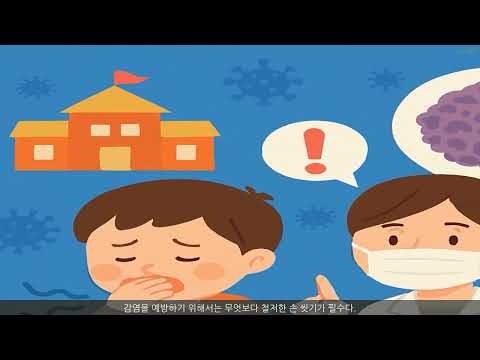
The Consequences are far from invisible, as South Korean health authorities claim that attention is needed as PM2.5 and PM10 readings spike up to over ten times the safe limit. Schools even cancel outdoor activities and a millions of population living in Korea do not leave their homes without a mask not by habit but necessity. Those with asthma especially the children and elderly have the heaviest burden.
Like all events do, there is science behind this harmful dust. Unlike ordinary dust, Hwangsa does not travel clean as the particles lift off the Gobi desert and cross thousands of Chinese industrial land, that helps to accumulate a toxic amounts of elements such as heavy metals, pesticides or even chemical pollutants. By the time the dust clouds reach Korea, it is no longer just sand but a cloud of toxic dust that is seriously harmful for people.
Though the harm is very evident, the causes of harm is not so transparent. In 2019, a scientific report by China, South Korea and Japan concluded that China was the source of about 32% of Korea's dust pollution. Another conducted study conducted by Korea's National insitute of Environmental Research had a higher rate that approximately 55 % of Korea's dust particles trace back to Chinese origins.
However, China disagreed. Beijing's Foreign Ministry contended that there is no scientific evidence that supports the claims that Korea's air pollution originates from Chinese soil. On the other hand, Korea responded that China's so and so "contribution" to this situation is undeniable.
In short, South Korea is now in a complex diplomatic predicament. The undeniable data they gathered is pointing China as the cause, but another undeniable fact that China is its largest trade partner arises economic concerns.
When conservative administrations call out China's "contribution", public anger from Korean citizens towards China increased. Progressive government however pursued diplomatic cooperation with China, that sometimes can be viewed as acting too soft on a significant issue that affects Koreans' daily life. Hwangsa, yellow dust, has always been a politically sensitive problem, and how the government would react to such issue would change consistently over time due to the vague cause.
https://www.chosun.com/english/national-en/2026/04/20/L6FX6VTBZJFUXHY7FN3B2IVYT4/
)
)


)

)